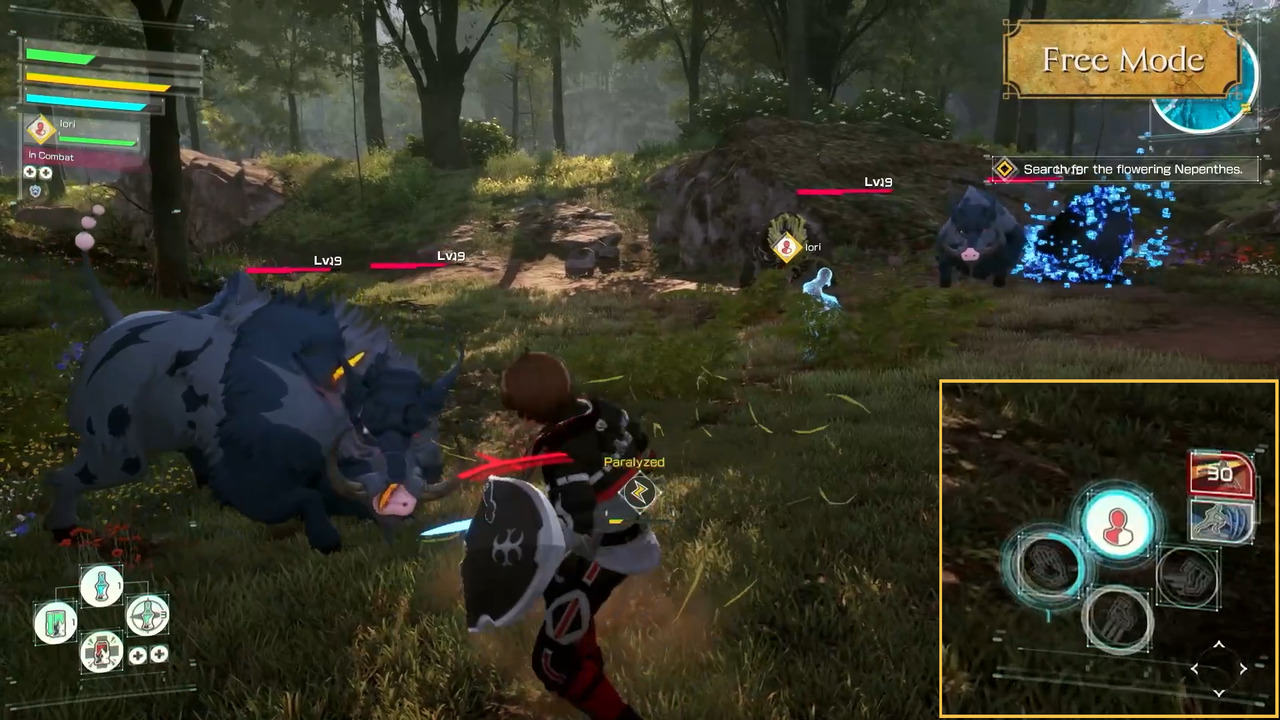
Use Switch Mode when you want the partner to draw an enemy's attention and open a timed attack. Use Free Mode when you want both characters to focus a target or clear enemies together.
Choose one partner before each quest
Your companion is autonomous, but the selection is a real build decision. Partners differ in weapon type, Support Skills, Sword Skills, and Combination Skills. Some emphasize healing, buffs, or enemy debuffs; others add direct pressure.
Switch Mode versus Free Mode
| Mode | Use it when | Your opportunity |
|---|---|---|
| Switch Mode | A tough enemy is focused on you or you need room to recover | Heal, restore resources, reposition, charge a heavy attack, or prepare a punish |
| Free Mode | You want combined pressure or efficient cleanup | Focus one target together or let the pair work through a group |
The modes can be changed in real time. Treat the command as part of your defense: changing enemy attention before committing to a slow Sword Skill is safer than hoping the partner interrupts at the right moment.

Match the partner to your weakness
- Heavy weapon users benefit from a partner who creates safe commitment windows.
- Aggressive dagger or rapier builds may prefer healing, defensive support, or enemy control.
- Shield builds can use an offensive partner to capitalize while the player holds attention.
- SP-heavy Sword Skill builds value support that covers recovery between bursts.
Prepare partner equipment
Partner weapons and skills can be managed from your room at an Inn. Revisit the setup when Cardinal Rank rises or when a partner begins falling behind the current quest. Partner capabilities also grow with Cardinal progression.