Pick one weapon family, equip three complementary Sword Skills as they unlock, spend Growth Points on its scaling, build a four-effect EX-Mod direction, choose a partner that covers your weakness, and carry both recovery items and field tools.
1. Learn the two-resource combat system
Normal attacks, dodges, and guarding consume Stamina. Sword Skills consume SP. If you empty either bar without creating space, your available responses shrink. In the opening dungeon, practice a short sequence: defend or evade, use one safe punish, then reset while both resources recover.
- Stamina: movement and physical defensive actions.
- SP: powerful Sword Skills and burst damage.
- HP: restore with Healing Crystals at Safety Areas and with carried consumables.
2. Treat the weapon as your class
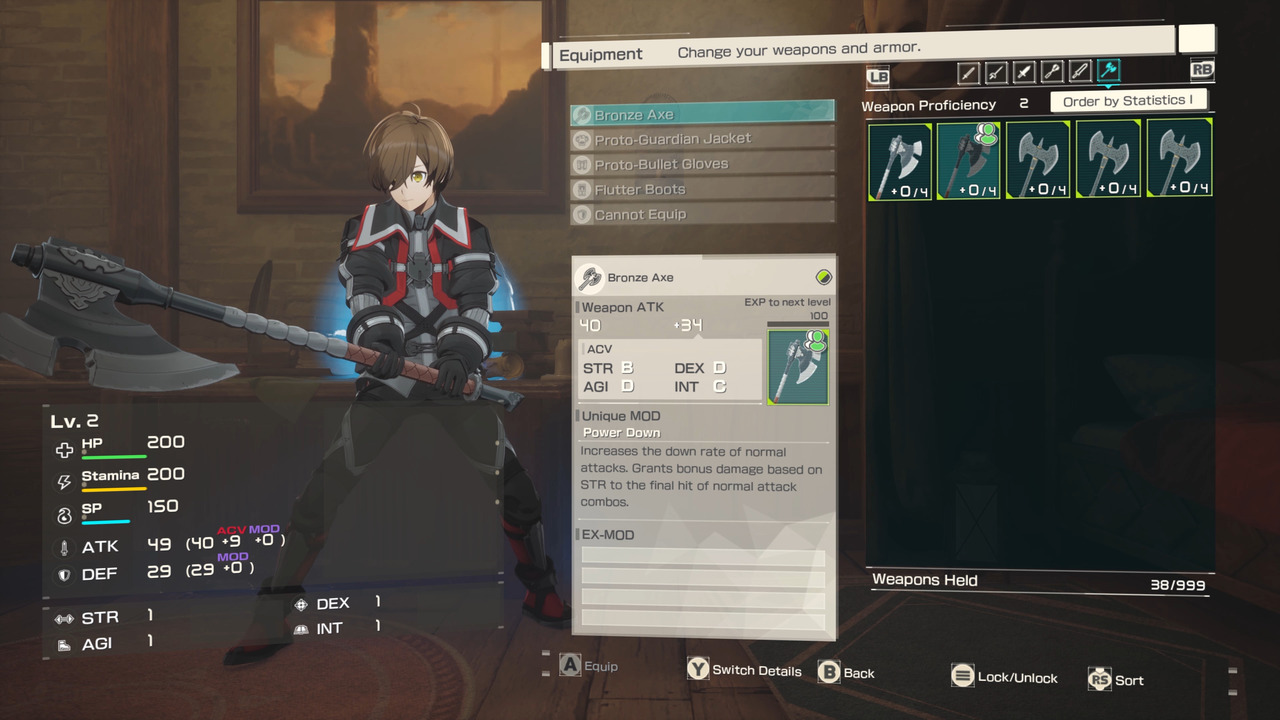
The six families are Sword, Rapier, Mace, Dagger, Two-Handed Sword, and Two-Handed Axe. Sword, Rapier, and Mace can use shields. Dagger favors speed and short-range pressure; the two-handed classes trade shield access for heavier attacks.
Use the tutorial to compare attack recovery and defense—not only damage. You can switch weapons in town between quests, but not in the middle of a quest. Weapon use earns Weapon EXP and unlocks additional Sword Skills; up to three can be equipped.
3. Establish your Town of Beginnings loop
- Inn: manage equipment, partner setups, and Growth Points from your room.
- Smithy: enhance weapons, synthesize same-type EX-Mods, and craft unlocked recipes.
- Item seller: buy or craft healing, SP recovery, and field utility items with Col and materials.
- Main Terminal: accept the next quest, choose a partner, and return to the field.
4. Do not destroy useful weapon drops
Before using a duplicate for enhancement or selling it, inspect its scaling, unique effect, and EX-Mods. Same-type synthesis lets a target weapon inherit selected effects from a donor, up to four. A low-attack sword with a useful mod may be more valuable as a donor than as a quick source of materials.
5. Spend Growth Points with a purpose
Strength, Dexterity, Agility, and Intelligence can contribute to weapon and skill damage depending on scaling. Vitality, Endurance, and Mind improve HP, Stamina, and SP-related capability. Early on, prioritize the main scaling of the weapon you actually use, then address the resource that limits your playstyle.
6. Pack field tools
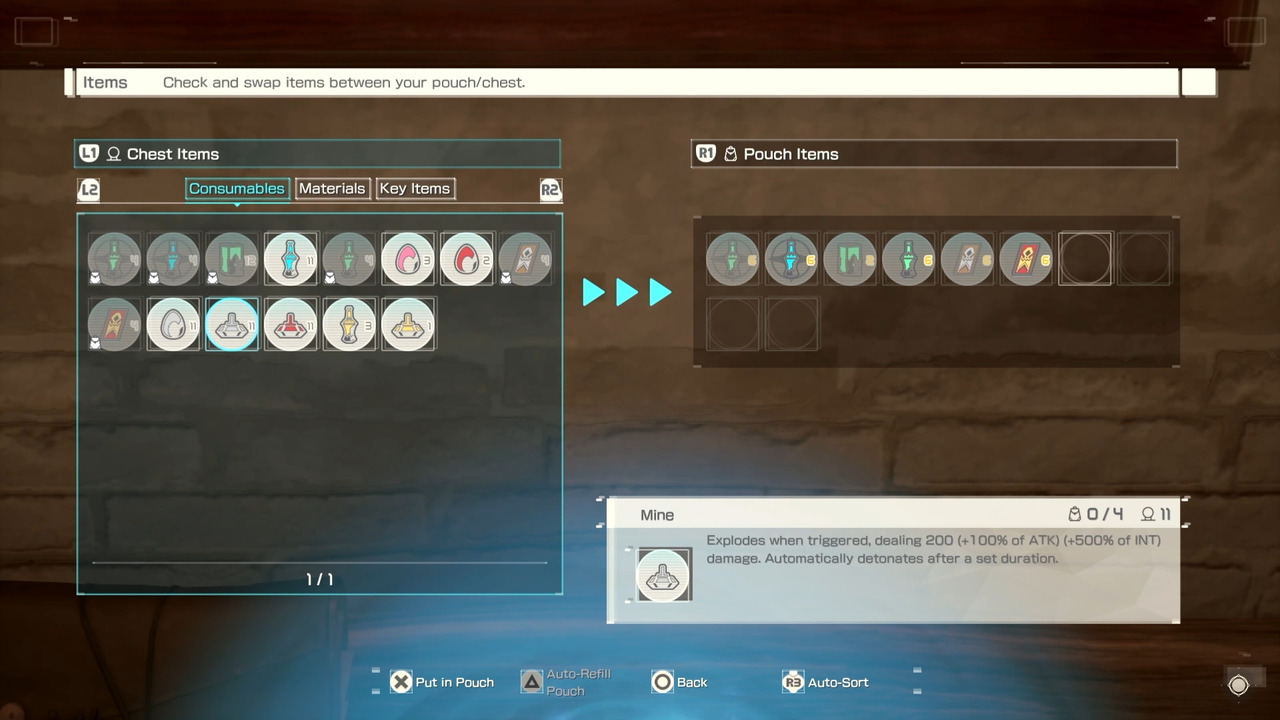
Exploration mechanisms can hide treasure and shortcuts. Keep the relevant crafted tools available: explosive items for brittle walls, fire tools for obstructing vines, movement talismans for gaps, and light-producing items for dark areas. A spare inventory slot also helps when a required item appears during the quest.
7. Reveal the map before farming
Activate checkpoints as you enter a new region. They reveal map information that can include treasure chests, unique mechanisms, hidden routes, and shortcuts. Once the map is visible, you can plan a clean collection route instead of repeatedly crossing the same area.
8. Use the partner command deliberately
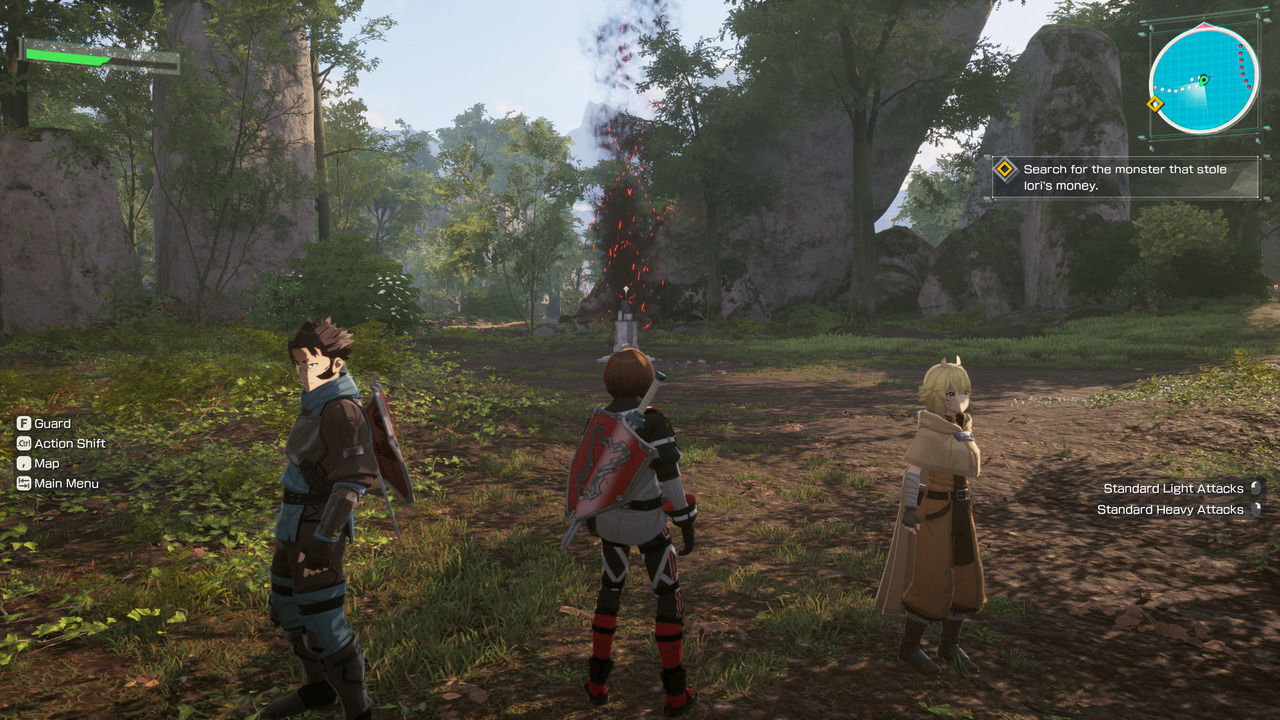
Choose one partner for each quest. Use Switch Mode when you need the partner to draw attention so you can heal, reposition, or prepare a timed attack. Use Free Mode when both characters should pressure one target or work through a group.
9. Prepare before crossing a boss barrier
Official guidance warns that a boss encounter cannot be abandoned after it begins. Before entering, return to base if needed, restock recovery items, check the partner and Sword Skill loadout, spend available Growth Points, and make sure your weapon has been improved.